Solution
Solution
UV Label Press Selection by Job Type

UV Label Press Selection by Job Type

A UV label press is bought against a job, not against a brochure. This page takes your substrate, roll width, run length, white-ink requirement and finishing needs and routes them to the platform class that actually fits, using the Focus Vesa-830A desktop POD UV label printer as the worked example. If you are specifying a digital uv inkjet label printer for the first time, the same shortlist doubles as a screen for label printer manufacturers: printhead source, ink-system design, in-line finishing and the support path after installation.

  • No coating stepPP, BOPP, POPP, PE, PET, PVC, paper, metal foil
  • 2 × Epson i3200 U1Piezo industrial printheads, 9600 nozzles
  • Die-cut + waste removalPlus take-up, on the same machine
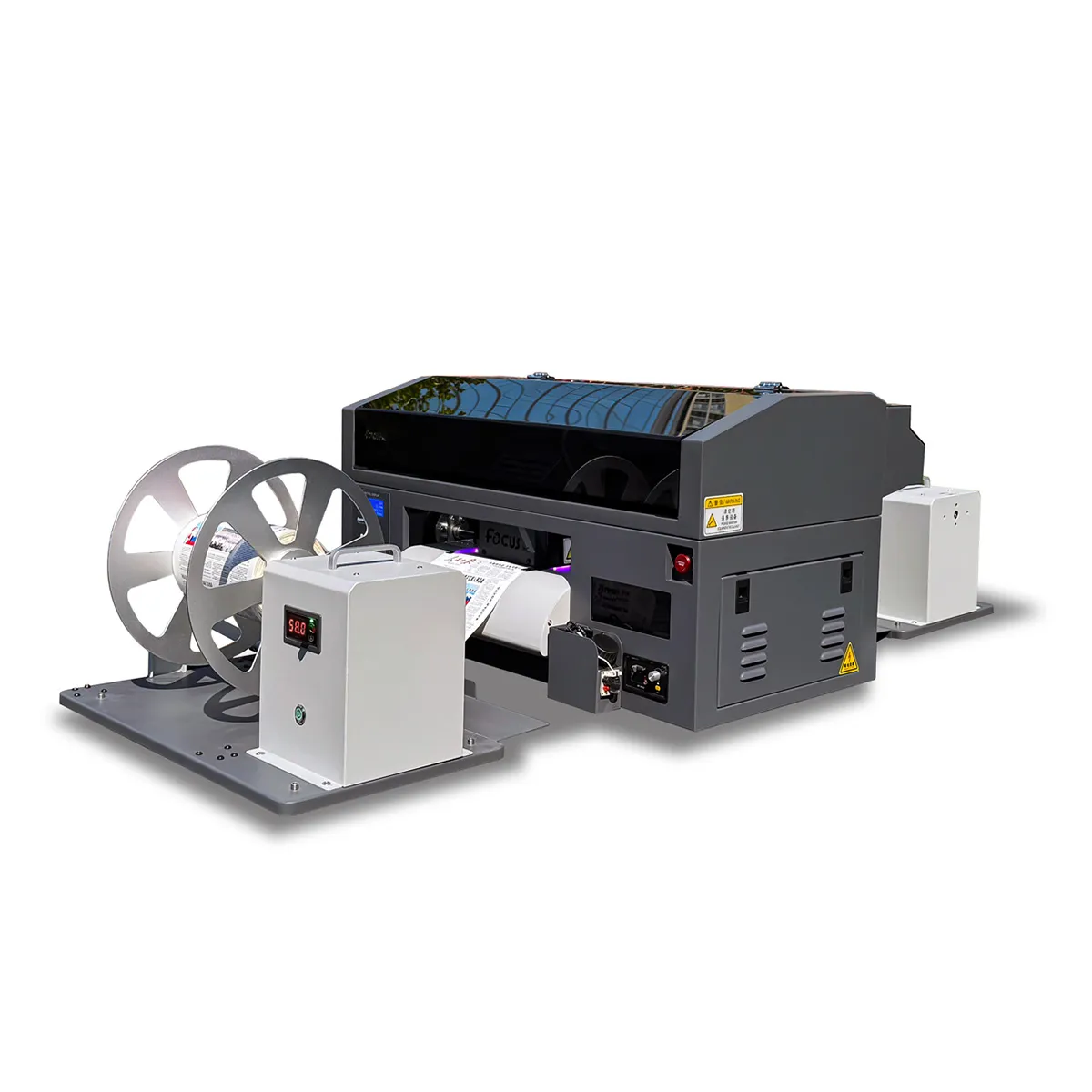
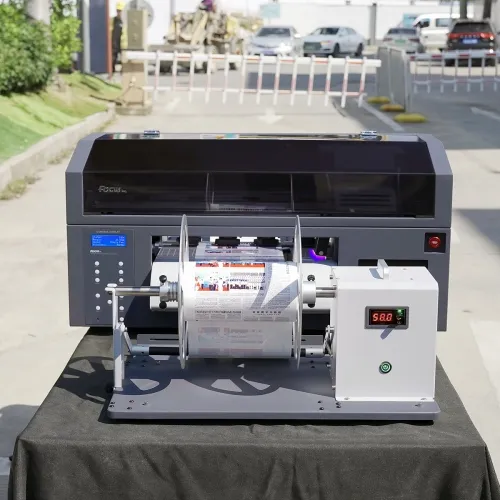
Focus Vesa-830A desktop POD UV label printer for plastic label production

Start From Your Job, Not From a Model Number

Five inputs decide the platform. Pick the value that comes closest to your production brief and jump straight to the matching row in the matrix below.

1. Substrate family

2. Maximum roll width

3. Run length band

4. White ink needed

5. Die-cut and waste removal

This panel is a selection aid that points to a machine class. Confirm the current specification set, configuration and availability on each product page before you build a quotation.

Print engine and curing section of the Focus Vesa-830A UV label printer

Vesa-830A Capability Deep-Dive: Print Engine and Curing

Each feature is written as the job outcome it buys, so you can decide whether it matters to your brief before it appears on a quotation.

  • Dual Epson i3200 U1 piezo printheads

    Two 9600-nozzle industrial heads share the image, so a damaged or ageing head is a maintenance event rather than the end of the machine's working life. Buyer decision: ask how long a head is rated to run and what a replacement costs before you commit to a duty cycle.

  • 3.8 pL droplets at 1200 × 2400 dpi

    Small droplets at high resolution protect fine type, small barcodes and gradients on film labels — the details that decide whether a label passes a scan or a brand check. Buyer decision: send the smallest text and the finest barcode you actually print.

  • 43.2 kHz grayscale printing

    Grayscale firing at high frequency is what keeps output usable on short runs where setup time, not ink, dominates the cost of the job. Buyer decision: price your quote against run length, not against headline speed.

  • LED UV real-time curing

    Curing happens with the print, so uncoated film, dark film and plastic materials can be handled straight off the machine and heat-sensitive stock is not exposed to a long drying tunnel. Buyer decision: request a cure and adhesion test on your own material, not on a sample supplied by the vendor.

Media feed, vacuum table and finishing section of the Vesa-830A UV label printer

Media Handling, White Ink and In-Line Finishing

The second half of the buying decision is what happens to the web before and after the printheads.

  • Self-tension unwinder and rewinder

    Automatic tension adjustment feeds material smoothly and holds registration during the run, which is what keeps a short run from turning into a sorting job. Buyer decision: confirm the roll weights and core sizes your operator will actually load.

  • 300 mm material width, φ350 mm roll diameter

    These two numbers set the largest label you can produce and how often the operator stops to change a roll. Buyer decision: match the maximum roll diameter to your planned unattended running time.

  • Vacuum adsorption print table

    Adjustable suction holds the film flat so it cannot bend up into the printheads — the difference between a clean run and a head-strike repair. Buyer decision: ask how suction is adjusted for thin versus stiff film.

  • Die cutting, waste removal and take-up in one pass

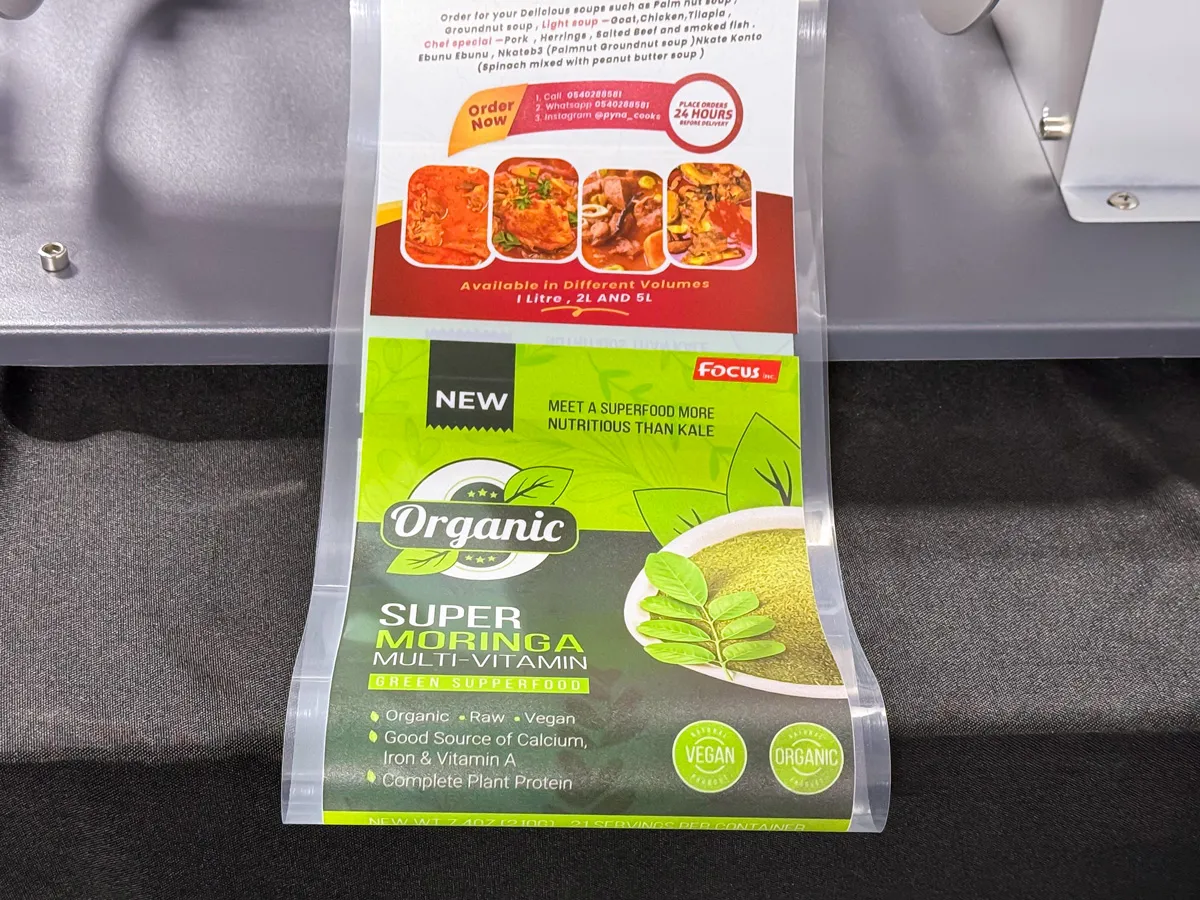
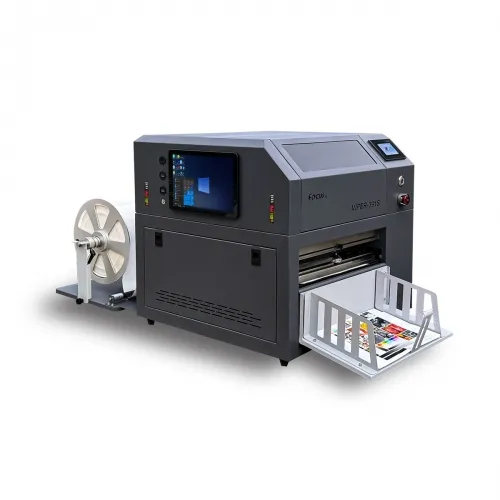
    The machine supports die-cutting while printing, or printing followed by die-cutting, with waste removal and take-up included. That removes a separate finishing machine and the handling between two stations. Buyer decision: cost the offline finishing line you would need if you bought a print-only platform.

  • Automatic head maintenance capping station

    The lifting cap station cleans and moisturises the heads automatically, which protects output quality across the working week. Buyer decision: ask what the routine cleaning cycle costs in time and consumables.

White Ink and Dark or Transparent Media

White is the specification that separates a platform you can quote confidently from one you have to work around. On the Vesa-830A it is handled in three connected ways.

White + colour synchronous printing

White and process colour are printed together, so dark and transparent plastic media are covered without a second white-only pass through the machine.

WIPCS white ink process system

A high-quality white ink circulation peristaltic pump driven by a gear motor keeps white pigment moving, which extends service life and reduces settling between jobs.

Closed-loop UV ink system

The closed-loop UV curing ink system is designed to minimise waste, so the cost of white coverage is predictable rather than a surprise on the ink invoice.

Buyer decision: ask for a proof on your darkest substrate and your clearest transparent film. White opacity on both is the fastest way to judge whether a platform suits your label range.

Core Specifications to Verify Before You Buy

Use these as the checklist you work through with any supplier. Each line states why the value changes your quotation or your workflow.

Specification Published value for the Vesa-830A Why it matters in your decision
Printheads 2 pcs Epson i3200 U1 piezo industrial printheads Sets the image-quality ceiling and the spare-parts path you will live with for years.
Nozzles 9600 nozzle Determines how fine small type and narrow barcodes stay after several production runs.
Ink droplet 3.8 pL Fine droplets give smooth gradients and clean edges on film and foil.
Printing frequency 43.2 kHz grayscale printing Affects how quickly a short run clears the machine and earns its setup time.
Resolution 1200 × 2400 dpi Sharp output for brand-critical labels and small-format packaging marks.
Curing LED UV real-time curing Immediate handling after print and suitability for heat-sensitive and plastic films.
Maximum media width 300 mm Defines the widest label or multi-up layout you can run.
Maximum roll diameter φ350 mm Sets how long the machine can run before an operator has to reload.
Compatible materials PP, BOPP, POPP, PE, PET, PVC, paper, metal foil, uncoated, dark and transparent media Confirms whether your stock needs a coating or primer step before printing.
White ink White + colour synchronous printing; WIPCS circulating white ink system Decides whether dark and clear media sit inside your product range.
Finishing Die cutting, waste removal and take-up, inline or print-then-die-cut Removes a separate finishing machine and the labour of moving work between stations.
Control and data Multi-function control panel, multi-language interfaces, intelligent scanning calibration, cloud-based data management Shortens operator training and helps manage label data across sites and languages.

The Vesa-830A page presents these as body-text technical features rather than a populated specification table. Ask your supplier to restate every value in writing on the quotation so nothing is carried over from a different model.

How to Evaluate Label Printer Manufacturers

Six checks that decide whether the machine on the quotation is still the right machine in year three.

Printhead assembly on the Vesa-830A UV label printer to verify with a supplier
  1. Printhead source and rated working life

    Ask which head is fitted and how long it is expected to run. The Vesa-830A uses two Epson i3200 U1 industrial heads, quoted to enhance long working life. Decision: a named head with a stated life is serviceable; an unnamed one is a risk.

  2. Ink system closure and waste

    A closed-loop UV curing ink system that minimises waste, plus a circulating white ink pump, keeps consumable cost stable. Decision: ask for a monthly ink estimate at your run length.

  3. Curing matched to your substrate

    LED UV real-time curing is stated for uncoated, dark and plastic materials. Decision: accept nothing until a cure and adhesion test has run on your own film.

  4. Head maintenance design

    An automatic lifting cap station cleans and moisturises the heads, which protects quality between jobs. Decision: ask for the routine cleaning cycle and its consumable cost.

  5. Finishing path, inline or offline

    Die cutting, waste removal and take-up on the same machine change the labour and floor space your costing assumes. Decision: cost both layouts before choosing the cheaper purchase price.

  6. Spares, training and local support

    Multi-language interfaces and cloud-based data management support cross-border operations, and the platform is described with flexible customisation for e-commerce label demand. Decision: agree the spare-parts list, response time and operator training before signing.

Sample Proof Workflow: Test Your Own Material

A print on your own substrate is the only comparison that counts. The sequence below keeps the proof tied to the job you are actually quoting.

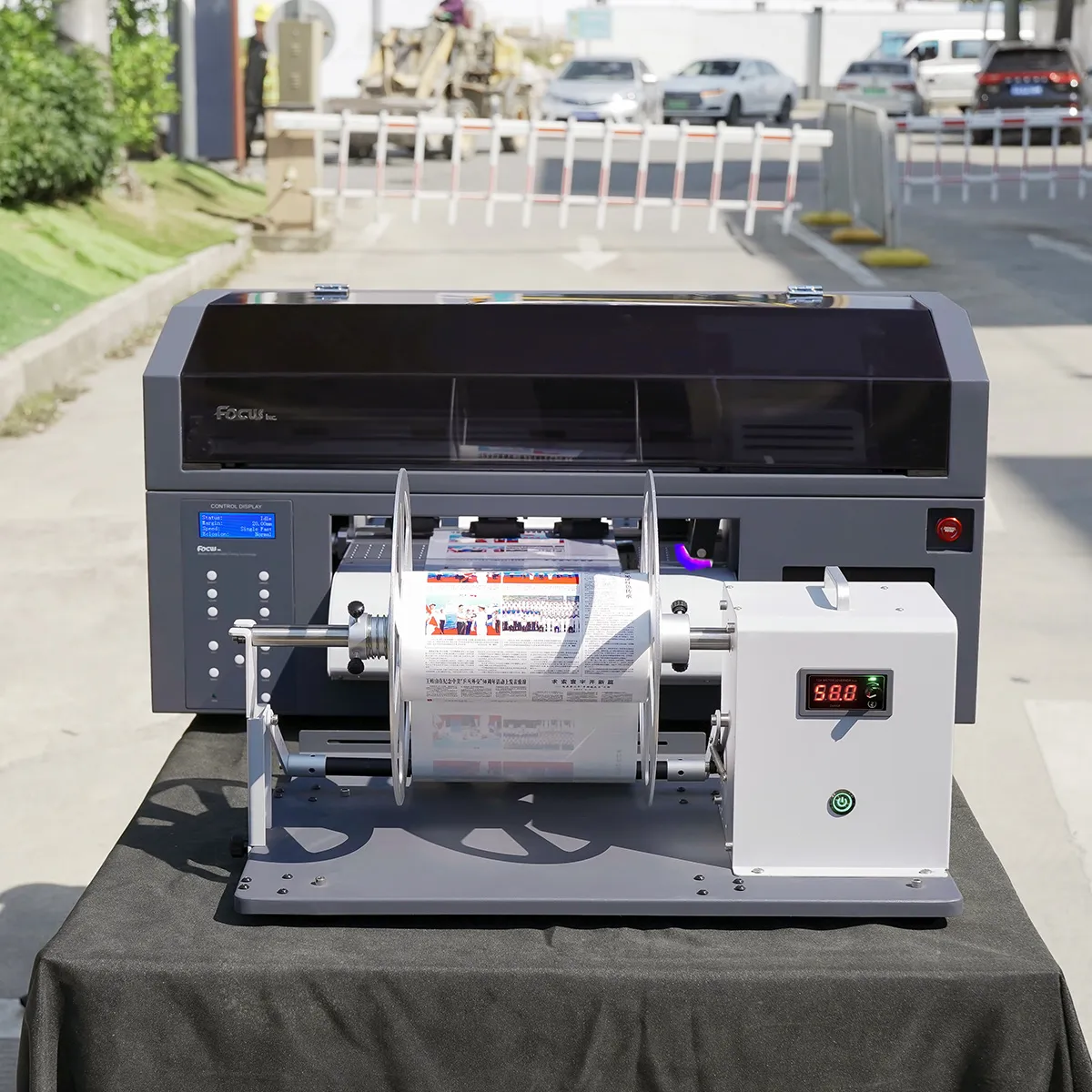
Vesa-830A label printer running material for a sample proof
  1. 01

    Send the material and the artwork

    Supply the film or paper you intend to run, your label dimensions, and the smallest type and barcode in the design.

  2. 02

    State the white and finishing requirement

    Confirm whether the label needs a white base layer, and whether it must leave the machine die-cut with waste removed.

  3. 03

    Review the proof against your acceptance criteria

    Check adhesion, white opacity on the darkest media and edge sharpness at 1200 × 2400 dpi — not on a demo substrate.

  4. 04

    Convert the proof into a quotation

    With the substrate and finishing route fixed, the configuration, roll width and finishing options can be priced without assumptions.

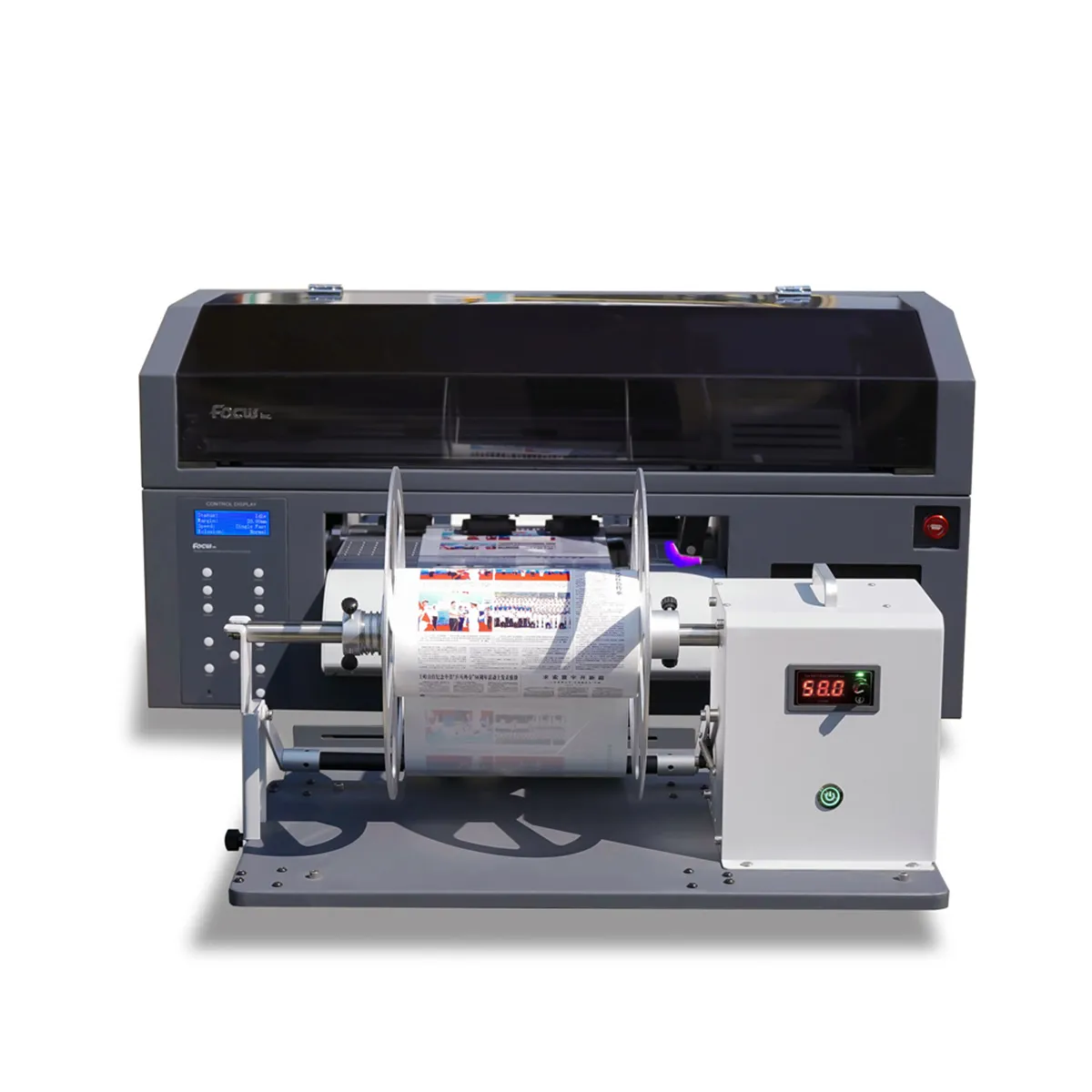
Focus inc. Vesa-830A POD UV label printer overall view

Product Spotlight: Focus Vesa-830A

Desktop POD UV label printer · label printer > VESA-830A Desktop UV Label Printer

The Vesa-830A is a desktop POD UV label printer aimed at the non-coating plastic label market: short-run and personalised labels, printed without a primer step, cured with LED UV, and finished on the same machine. It is the platform this page recommends for the first three job profiles in the match table, and the reference point against which the single-pass platforms in the class matrix should be compared.

  • Dual Epson i3200 U1 printheads
  • 1200 × 2400 dpi
  • White + colour in one pass
  • 300 mm width, φ350 mm roll
  • Die cut, waste removal, take-up
Open the full Vesa-830A product page →

Related Reading

Three notes to help clarify product requirements before contacting the supplier.

Pp pet pvc and pe materials for digital uv inkjet label printing

Pp pet pvc and pe materials for digital uv inkjet label printing

Read article

Personalized labeling workflows for short run uv label printing

Personalized labeling workflows for short run uv label printing

Read article

Uv label printers vs thermal label printers for printed packaging labels

Uv label printers vs thermal label printers for printed packaging labels

Read article

Frequently Asked Questions

which materials can the vesa-830a print without a coating step?

the product page lists no coating required for pp, bopp, popp, pvc, pet, paper and metal foil, and describes led uv real-time curing on uncoated materials, dark materials and plastics such as pp, popp, pe, pet and pvc.

what printhead, resolution and droplet size are used?

the machine is configured with 2 pcs epson i3200 u1 piezo industrial printheads, stated as 9600 nozzle, achieving a 3.8 pl ink droplet at 43.2 khz grayscale printing, with 1200 × 2400 dpi resolution.

can it print white under colour on dark or transparent media?

yes. white + colour synchronous printing is stated to support dark and transparent plastic media, and the wipcs white ink process system uses a high-quality white ink circulation peristaltic pump with a gear motor to extend service life.

what is the maximum roll size the machine handles?

it supports a maximum material width of 300 mm and a maximum media roll diameter of φ350 mm, with a self-tension unwinder and rewinder that adjusts tension automatically during printing.

does it finish labels in a single pass?

it supports die-cutting while printing or printing followed by die-cutting, and supports printing, die cutting, waste removal and take-up all in one, so a separate offline finishing station is not automatically required.

how do i request a price or a sample proof?

use the contact us page or the send inquiry form on the product page, and include your substrate family, maximum roll width, run length band, whether white ink is needed, and whether die-cut and waste removal must be inline. a proof on your own material is the most reliable way to confirm fit before ordering.

Focus Inc. © All Rights Reserved.